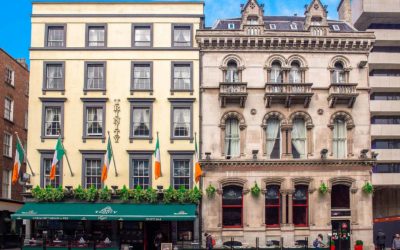
The Perfect 3-Day Dublin Itinerary for First-Time Visitors
Three days in Dublin is the sweet spot. Long enough to actually get a feel for the city — to walk the streets, drink the pints, learn which pub to make your regular. Short enough that you don’t spend the third day exhausted and grumpy, lying in your hotel room watching Irish TV wondering why the weather is so weird.
This itinerary assumes you’re staying in central Dublin (if you’re not, see our where to stay in Dublin guide). It hits the essentials, the things that are actually worth your time, and leaves room for wandering — because the best Dublin discoveries happen when you get a bit lost on a side street and end up in a pub you didn’t plan to visit.
It also assumes you want the balanced Dublin experience — not a checklist tour where you sprint between attractions, but a real visit where you actually meet the city.
A few things to know before you start
Dublin is small. The centre is genuinely walkable. Most of this itinerary is under 2km end to end. You’ll walk more than you think, and that’s the point.
The weather is unreliable. Pack layers. A sunny morning can turn to sideways rain by 3pm. Locals don’t let it stop them — they just carry umbrellas they refuse to use.
The Guinness is better here. Not a marketing line. The same Guinness shipped to New York tastes different. Drink it where it’s poured properly.
Pubs close between 11pm-3am depending on the day. Thursday, Friday, Saturday are the late nights. Sunday everything closes early.
Tip in restaurants: 10-12.5% is standard if service was good. Some restaurants add a service charge, check the bill.
Taxi apps: Free Now (works in Ireland), Uber (limited availability). Taxis are reasonably priced.
Day 1 — Old Dublin, properly
The first day should be about getting your bearings. The big-ticket historic stuff, the bits you’ll tell people about when you get home.
Morning: Trinity College & the Book of Kells
Start at Trinity College (College Green, 9:30am, €18-22 per adult). The Book of Kells is the famous illuminated manuscript — 1,200 years old, stunning, smaller than you’d expect. The real highlight is the Long Room in the Old Library — a 65-metre library with marble busts and 200,000 of the library’s oldest books. It’s like stepping into Hogwarts.
Allow 90 minutes. Go early, queues thin out around 11am.
Pro tip: Trinity is in the middle of the city. After your visit, you’re 5 minutes from Temple Bar, 10 minutes from Grafton Street, 15 from St Stephen’s Green. Don’t go anywhere far for lunch.
Midday: Lunch on Fade Street or Georges Street
Fade Street (3 min walk from Trinity) is the best lunch street in the centre. A few options:
- The Winding Stair — old-school Dublin, good Irish menu
- L. Mulligan Grocer — for a real Irish pub lunch (stew, fish & chips)
- Pygmalion — if you want something a bit fancier
- Klaw — if you love seafood, the crab claws are famous
Pro tip: Try the Irish stew. Sounds basic. Isn’t. Done right, it’s one of the best things on any menu in Dublin.
Afternoon: Dublin Castle & Christ Church Cathedral
Dublin Castle (off Dame Street, free entry to State Apartments, €7 for self-guided tour) is a 13th-century castle that became the seat of British rule in Ireland. The State Apartments are surprisingly opulent. The gardens are free and quiet, good for a 20-minute sit-down. Allow 1.5 hours.
Christ Church Cathedral (5 min walk from Dublin Castle, €10 adult) is the older of Dublin’s two medieval cathedrals, founded 1030. The crypt is one of the largest in the UK and Ireland. Allow 45 minutes.
Skip: St Patrick’s Cathedral is right next to Christ Church and technically bigger, but the experience is similar and you’ve got a limited day.
Evening: First trad session
Trinity Bar Venue on Dame Street (5 min walk back from Christ Church) is where you want to start. It’s where locals drink, not where coach tours stop. Sit at the bar, order a pint of Guinness, and just see what happens. Most nights there’s a trad session or live music from 8pm onwards. If it’s not your vibe after 30 minutes, you’re 30 seconds from the bigger Temple Bar pubs.
Dinner in the area: Gallagher’s Boxty House (Temple Bar, traditional Irish) or The Quays (same area, gastropub vibe).
Day 2 — Modern Dublin, Guinness, and the coast
Day 2 is about the things that make Dublin Dublin in the 21st century — the food scene, the modern cultural institutions, the Guinness.
Morning: National Museum of Ireland (free)
National Museum of Ireland — Decorative Arts & History (Collins Barracks, free) or the Natural History Museum (Merrion Street, free, the “dead zoo” as locals call it). Both are good, pick one.
If you want context for Ireland’s history, the Museum of Country Life (Castlebar, way out of town) is better. The Collins Barracks museum is more about Irish design and social history. The Natural History is an old-school Victorian museum that hasn’t been renovated in 100 years — kids love it, it’s charming.
Allow 1.5 hours.
Midday: Walk the southside, lunch at Avoca
Avoca (11 Suffolk Street) is a Dublin institution. The food is good (modern Irish, generous portions, vegetarian-friendly), the gift shop is dangerously good (wool blankets, Irish design, candles), the atmosphere is unfussy. Allow 1.5 hours total.
After lunch, walk the southeast arc: Grafton Street shopping → St Stephen’s Green park (lovely on a sunny day) → back to your hotel for a rest.
This is your rest afternoon. Dublin is more fun when you’re not exhausted.
Afternoon: Guinness Storehouse (allow 2.5 hours including travel)
Guinness Storehouse (St James’s Gate, 25-30 min walk from Grafton Street or short bus, €26-32 with tastings) is the most popular tourist attraction in Ireland and it earns the hype. Self-guided tour through the brewing process, the history, the advertising. You end up in the Gravity Bar on the top floor with a 360° view of Dublin and a pint of Guinness included.
Local take: Yes it’s touristy. Yes it’s worth it. The Guinness at the top floor is genuinely different from a pub pint.
Pro tip: Book the 4pm or 5pm slot. Lines are shorter, the light at sunset over Dublin is genuinely beautiful, and the bar is less crowded.
Evening: Modern dinner + a different vibe
For dinner tonight, push the boat out a little:
- The Winding Stair (Lower Ormond Quay) — excellent modern Irish, book ahead
- Gruel (off Dame Street) — tiny, no reservations, often queued
- Etto (Merrion Row) — small, perfect, very Dublin
- Pygmalion (Powerscourt) — if you want a buzz and a cocktail
After dinner, Whelan’s (South Great George’s Street) is a music venue that’s been running since the 90s — everything from trad to indie to standup. Or if you want the more traditional, The Palace Bar (Temple Bar) is a quiet, classy spot with good music and a no-phones-on-the-bar rule.
Day 3 — Day trip or Dublin deeper
Day 3 is your flex day. Two great options:
Option A: Day trip out of Dublin (recommended)
Dublin is well-connected for day trips. Half-day or full-day, easy to do.
Wicklow Mountains & Glendalough (1 hour south by bus) — glacial lake, monastic ruins, mountain walks. The Day Trip from Dublin guide covers this in detail. Take the 9am bus, back in Dublin by 7pm.
Howth (30 min by DART) — fishing village, cliff walks, seafood lunch. Half-day.
Malahide (30 min by DART) — castle, gardens, beach. Half-day.
Option B: A third day in Dublin
If you’d rather stay in the city:
- Chester Beatty Library (Dublin Castle, free) — one of the best small museums in Europe, the collection is extraordinary
- Kilmainham Gaol (€8, take bus 13 or 40 from city centre) — Ireland’s most important political museum, the 1916 Easter Rising is the central story
- Marsh’s Library (besides St Patrick’s, free) — oldest public library in Ireland, 1701, still has the original reading cages
- Glasnevin Cemetery (€12 with tour, bus from city centre) — where most of the famous Irish are buried, the tour is excellent
- Phoenix Park (15 min walk from city centre) — largest enclosed park in any European capital, deer roam free
Day 3 evening: The best session of the week
If you’re in Dublin on a Wednesday, Thursday, Friday, or Saturday — do a proper trad session. The session that’s the realest, least touristy, most likely to be musicians playing for love:
The Cobblestone (King Street North, Smithfield) — widely considered the best trad pub in the city. 7 nights a week. Free. 15 min walk from Temple Bar, or 2 stops on the Luas.
Or for a more contained experience, the upstairs session at Oliver St John Gogarty’s (Temple Bar) from 9pm is reliably good.
End your Dublin trip with a proper trad session. It’s the thing you’ll remember longest.
Day-by-day cheat sheet
Day 1 — Old Dublin
- 9:30am: Trinity College, Book of Kells, Long Room
- 12pm: Lunch on Fade Street
- 2pm: Dublin Castle
- 4pm: Christ Church Cathedral
- 7pm: First trad session at Trinity Bar Venue
- 9pm: Dinner (Gallagher’s Boxty House or The Quays)
- 10:30pm onwards: Temple Bar pubs
Day 2 — Modern Dublin
- 10am: National Museum (free)
- 12pm: Lunch at Avoca + walk Grafton Street + St Stephen’s Green
- 2pm: Rest at hotel
- 4pm or 5pm: Guinness Storehouse
- 7:30pm: Dinner (The Winding Stair or Etto)
- 9:30pm: Whelan’s for live music
Day 3 — Day trip or deeper
- Option A: Wicklow/Glendalough day trip (recommended) OR
- Option B: Chester Beatty + Kilmainham Gaol + Glasnevin Cemetery
- 7pm: Early dinner back in city centre
- 9pm: The Cobblestone for proper trad session
What I’d add with a 4th or 5th day
If you have more time:
- Newgrange (1 hour north) — 5,200-year-old passage tomb, older than the pyramids. A real bucket-list thing.
- Belfast (2 hours by train) — the Titanic Quarter, the political history, the food scene
- Dingle Peninsula (4 hours by car) — wild Atlantic way, proper trad music, the Gaeltacht
- Kilkenny (1.5 hours by bus) — medieval city, castle, Smithwick’s brewery tour, good for a slow day
Dublin itinerary FAQ
Is 3 days enough for Dublin? Yes for the essentials. You’ll get the main sights, a good feel for the city, plenty of trad music, and a sense of whether you want to come back. Not enough to see everything, but you don’t need to.
Is Dublin expensive? Yes, more than most European capitals. A decent dinner for two with wine is €70-100. A pint of Guinness is €6-7. A 3-star hotel in the centre is €150-250/night. The city is walkable so you save on transport.
Do I need to book the Book of Kells in advance? Not strictly, but if you’re there in summer or on a weekend, booking online saves queueing. €18-22.
Is the Guinness Storehouse worth the hype? Yes. It’s the most popular tourist attraction in Ireland for a reason. Book the late afternoon slot for fewer crowds.
What about a day trip to the Cliffs of Moher? Don’t. It’s 3.5 hours each way by bus, and you’d spend 8 hours on a bus for 2 hours at the cliffs. The Wicklow Mountains, Howth, and Malahide are all under 1 hour and a much better use of a day.
Should I do a hop-on-hop-off bus? No. Dublin’s centre is walkable and the buses are useful but not as tourist traps. The hop-on-hop-off is fine but it makes you lazy about exploring.
Can I see the Book of Kells for free? No, but you can walk around Trinity College’s grounds for free (the cobbled squares, the Front Square with the bell tower). The Book of Kells itself and the Long Room are ticketed.
What about rainy day backup? Most of the suggestions above work in rain except the day trips. On a wet day, do the Chester Beatty Library (Dublin Castle, free, indoor), the National Museum (free, indoor), and finish at a pub for a long session. Dublin in the rain is still Dublin.
Planning a Dublin trip? Stay at Dublin Citi Hotel on Dame Street — walkable to every stop in this itinerary. For trad sessions and live music most nights, Trinity Bar Venue is 2 minutes away.